
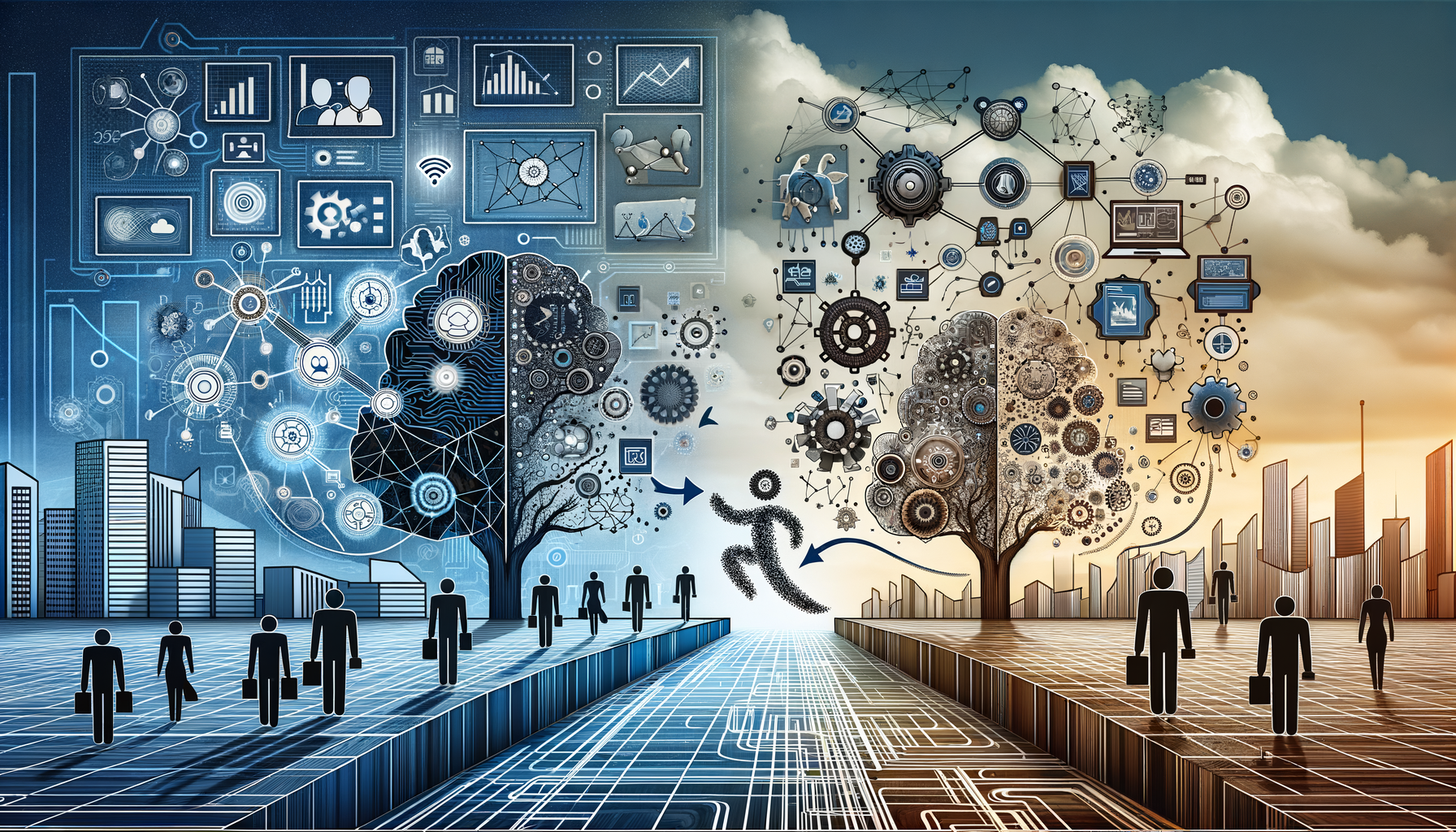
How AI is Redefining Organizational Structures: Lessons from Moderna
For marketing professionals, the integration of artificial intelligence (AI) into business operations is not just a trend—it’s a revolution that’s reshaping not only how we market our products but also how our organizations function at their core. A compelling case study that highlights this transformation is Moderna’s recent decision to merge its Human Resources (HR) and Technology departments, creating a unique role of Chief People and Digital Technology Officer. This move signals a revolutionary shift in workforce planning, blending human expertise with digital innovation.
Separating Work: Humans vs. AI
The essence of this organizational shift is deceptively simple yet profound: companies need to rethink what work should be accomplished by humans and what tasks can—and should—be automated through AI technologies.
As a marketing professional, consider how roles within your team are being transformed. What tasks can AI handle? Are there processes that could benefit from automation? Moderna is paving the way, having devised over 3,000 bespoke internal AI tools designed specifically for different tasks. For example:
- Clinical Trials: AI tools assist in selecting the most appropriate doses for clinical trials.
- Regulatory Compliance: Drafting responses to regulatory inquiries is expedited and made more accurate through AI.
- Employee Support: An internal HR AI agent serves as a junior analyst, managing employee queries and directing them to appropriate resources.
The Synergy of HR and Technology
Traditionally, HR has focused on managing people while IT dealt with systems. However, the emergence of AI challenges this conventional boundary. When AI systems can perform tasks previously designated for entry-level roles, the integration of human and digital resources necessitates a new perspective on workforce planning.
In this new landscape, decisions around technology adoption become intertwined with people decisions. As marketing teams, we need to start thinking about our human resources not just as labor but as vital components that can work alongside AI. By merging HR and IT functions, Moderna addresses the hybrid workforce conundrum, paving the path for broader collaboration between humans and AI.
The Pandemic’s Influence
The COVID-19 pandemic provided a dramatic context for Moderna’s transformation. The company expanded its workforce exponentially as it raced to develop and deliver vaccines. This rapid growth led to a strategic reorganization of workforce roles and responsibilities, turning to AI as a vital tool for streamlining operations.
This real-world example resonates with the marketing sphere. As we welcome and adapt to an accelerated digital transformation, similar reimagining is required. Questions to consider include: How will your marketing department evolve as AI tools are adopted? What traditional roles might need redefining or might even become obsolete?
A Broader Perspective: Redesigning the Organization
The comprehensive integration of AI into a company’s operational fabric extends far beyond the introduction of tools. It initiates a significant shift in organizational design. As companies like Moderna demonstrate, deploying numerous internal AI agents effectively modifies the interplay between departments and realigns roles within the organizational structure.
We should all take note. The merging of HR and IT is a clear indicator of where workforce planning is headed. In the near future, we might witness marketing teams structured around a synergistic collaboration of both human talent and AI capabilities. This isn’t simply about technology adoption—it’s about fostering a culture that embraces innovation and agility.
The Takeaway: AI as an Organizational Catalyst
In conclusion, the journey Moderna undertook provides invaluable insights for all of us in the marketing field. Embrace the idea that integrating AI isn’t just about enhancing processes; it’s about transforming how we conceptualize workforce planning and organizational structure. As we reflect on this narrative, let’s ask ourselves:
- How can we leverage AI to optimize our marketing strategies?
- What aspects of our organization need to evolve to support a hybrid workforce of humans and AI?
- Are we ready to redefine our roles and responsibilities in this ever-changing landscape?
Ultimately, the future is collaborative. As we move forward, let’s be intentional about designing our organizations for success—one where human ingenuity and AI technology work hand in hand to drive growth and innovation.